

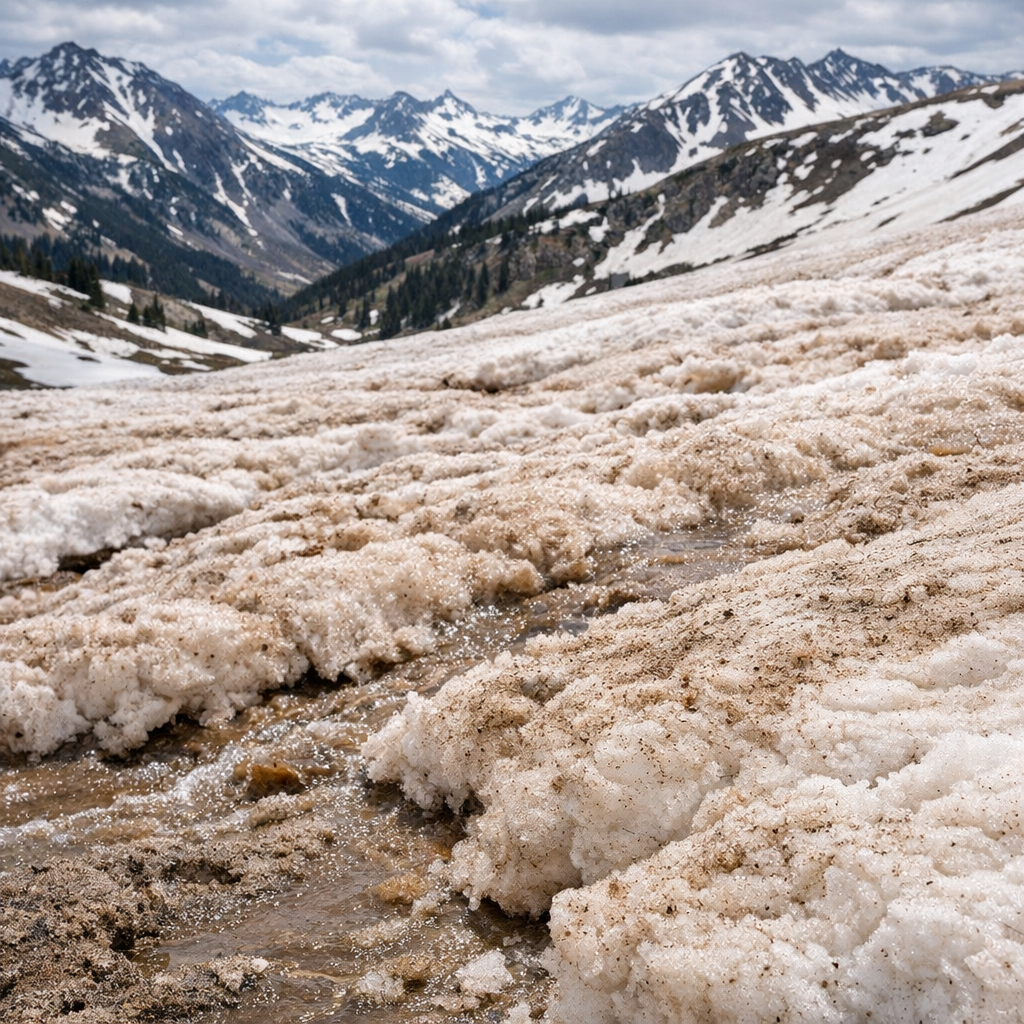
Recent studies have highlighted a significant environmental concern: dust from global sources is accelerating snowmelt in Colorado’s mountains, impacting water availability and local ecosystems.
Understanding Dust-on-Snow Events
Dust-on-snow events occur when wind carries dust from arid regions and deposits it onto snow-covered mountains. This dust darkens the snow’s surface, reducing its reflectivity and causing it to absorb more sunlight. As a result, the snow melts faster than it would if it remained clean and white.
Global Sources of Dust
While local activities contribute to dust production, a substantial portion originates from global sources. Deserts in Asia and Africa, for instance, release vast amounts of dust into the atmosphere. This dust can travel thousands of miles, crossing oceans and continents, before settling on snowpacks in regions like Colorado.
Impacts on Colorado’s Water Resources
The accelerated snowmelt due to dust deposition has several implications for Colorado:
- Altered Runoff Timing: Early snowmelt leads to earlier peak river flows, which can disrupt water management strategies and affect agricultural planning.
- Reduced Water Availability: Faster melting can result in reduced water availability during the late summer months, a critical period for both agriculture and municipal water supply.
- Ecosystem Disruption: Aquatic ecosystems rely on gradual snowmelt to maintain stream flows. Rapid melting can lead to habitat loss and affect species that depend on consistent water levels.
Local Observations and Concerns
In areas like Silt, Colorado, residents have observed changes in snowmelt patterns. Farmers and water managers are particularly concerned about the unpredictability of water availability, which can affect crop yields and water rights agreements.
Addressing the Issue
Mitigating the effects of global dust deposition requires both local and international efforts. Strategies include:
- Land Management Practices: Implementing soil conservation techniques in dust-producing regions can reduce the amount of dust entering the atmosphere.
- Monitoring and Research: Continued research on dust sources and deposition patterns can help predict and manage future impacts.
- Policy Initiatives: International cooperation is essential to address the transboundary nature of dust transport and its environmental consequences.
Understanding the global nature of dust-on-snow events is crucial for developing effective strategies to protect Colorado’s water resources and the communities that depend on them.