

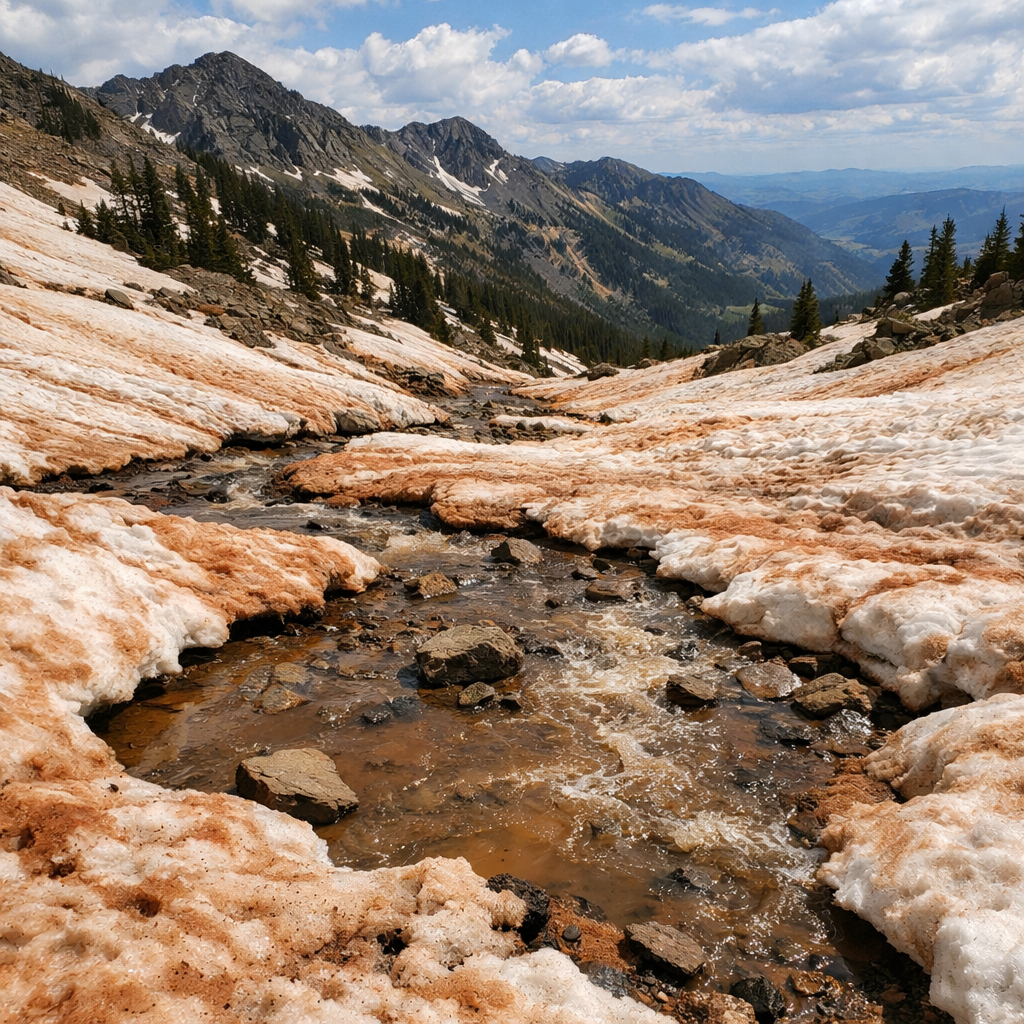
Recent studies have highlighted a concerning trend: dust from global sources is accelerating snowmelt in Colorado’s mountains, directly impacting water resources in towns like Silt. This phenomenon, known as ‘dust-on-snow,’ occurs when dust particles settle on snowpack, darkening its surface and increasing solar absorption, leading to faster melting.
Research indicates that dust events can advance snowmelt by up to 50 days, potentially reducing river runoff by about 5% annually. For the Colorado River, this translates to a significant loss of water, affecting communities reliant on its flow. The Center for Snow and Avalanche Studies monitors these dust layers and their effects on snowmelt timing and rates.
In Silt, situated along the Colorado River, accelerated snowmelt can lead to earlier peak flows and reduced water availability during the summer months. This shift poses challenges for water management, agriculture, and local ecosystems. Additionally, increased sediment in runoff can degrade water quality, affecting both human consumption and aquatic life.
Understanding the global nature of dust-on-snow events is crucial. Factors such as land use changes, desertification, and climate change contribute to increased dust emissions worldwide. Addressing these issues requires international cooperation and local adaptation strategies to mitigate the impacts on communities like Silt.